

Table of Contents
CUSTOMER MARKET SEGMENTATION STILL MATTERS
Know thy customer
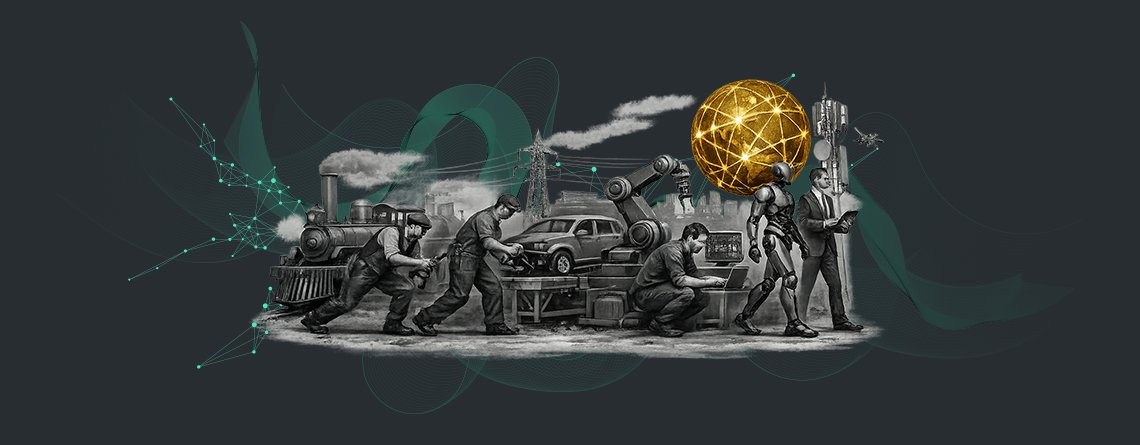
When Wendell Smith formalised the concept of customer market segmentation in 1956, he offered the marketing world something it had been reaching for without quite knowing it: a structured vocabulary for the intuition that different customers want different things. Markets are not homogeneous, and treating them as though they are produces strategies that serve no one particularly well. The Fourth Industrial Revolution (4IR) has not simply introduced new technologies into the marketing landscape; it has fundamentally altered the nature of the human beings that customer market segmentation was designed to understand.
From those mid-20th century origins, customer market segmentation evolved steadily into a set of interconnected frameworks that gave marketers increasingly precise tools for understanding their audiences. Demographic segmentation offered the first layer, organising customers by age, income, gender, and occupation in ways that were measurable and actionable. Psychographic frameworks added considerable depth, moving beyond who a customer is on paper to explore their values, motivations, lifestyle choices, and aspirations. Geographic segmentation recognised that location shapes behaviour in ways that demographic data alone cannot capture, while behavioural frameworks brought the analysis closest to the point of decision, examining how customers actually interact with products, categories, and brands over time.
Together, these four dimensions produced a richer and more reliable picture of the customer than any single lens could provide, and their combination remains the foundation upon which effective customer market segmentation is built today. Additionally, behavioural economics adds a further dimension of understanding to this evolution, reminding practitioners that customers do not always behave in ways that align with their stated preferences or demographic profiles.
People are motivated by emotion, shaped by context, and influenced by cognitive shortcuts that operate largely beneath conscious awareness. This is precisely why structured customer market segmentation matters so much as a strategic discipline: it creates the conditions for genuine insight rather than assumption, allowing marketers to design communications, products, and experiences that meet real human needs rather than imagined ones. Every downstream decision in a marketing strategy, from channel selection to messaging, pricing to product development, is only as sound as the customer understanding it rests upon. Customer market segmentation provides that understanding, and without it, even the most ambitious strategy is built on uncertain ground.
CUSTOMER MARKET SEGMENTATION IN A 4IR WORLD
Translating traditional frameworks for the modern context
AI, IoT-connected devices, automation, and continuous data exchange have created a world in which consumer identity is fluid, contextual, and constantly in motion. A person engaging with a wellness brand on a quiet Sunday morning occupies an entirely different psychological and behavioural space than the same individual making a rapid purchasing decision on a commute. These are not minor variations within a fixed segment; they represent genuinely distinct personas, shaped by platform, mood, and moment. The marketer’s challenge in this environment is therefore not purely technological but philosophical, requiring a fundamental rethinking of what a customer segment actually is and what it is designed to do.
Traditional customer market segmentation was built for a world where consumer identity was relatively stable, data was scarce, and the feedback loop between brand and audience moved slowly enough to allow for periodic reassessment. 4IR has dismantled each of those assumptions simultaneously. Identity is now dynamic, data is abundant, and audiences shift faster than legacy segmentation models were ever designed to track. The structural aspects of those models that rely on fixed demographic or psychographic categories are not obsolete, but they require meaningful evolution. Effective customer market segmentation in a 4IR context must incorporate behavioural signals drawn from continuous data exchange, recognise the fluid nature of modern consumer identity, and operate with the kind of real-time responsiveness that static frameworks simply cannot provide.
The actionable path forward begins with an honest audit of current segmentation practice against 4IR readiness, examining where existing frameworks rely on assumptions that dynamic data could replace with genuine insight. Investment in capability building should prioritise the tools and talent required to translate continuous audience intelligence into decisions that shorten the distance between brand and consumer in meaningful ways. Equally important is cultivating the organisational agility to act on that intelligence in real time, which requires not just better technology but clearer internal processes and a culture comfortable with iteration.
TECHNOLOGY IS REWRITING CUSTOMER MARKET SEGMENTATION
Understanding the problem intellectually vs being equipped to solve it
Most skilled marketers and brand managers operating today can articulate with considerable precision why 4IR technologies are reshaping customer market segmentation, what dynamic audience intelligence means in principle, and why traditional frameworks require evolution. Yet genuine adoption stalls, not from a lack of intellectual curiosity or strategic ambition, but from a cluster of very real operational and organisational pressures that make the threshold of change genuinely difficult to cross.
The volume and velocity of data available in a 4IR environment is, for most marketing teams, both an extraordinary opportunity and an overwhelming operational reality. Customer market segmentation has always required the ability to synthesise audience information into actionable insight, but the scale at which data is now generated through IoT-connected devices, continuous platform exchange, and AI-driven behavioural tracking far exceeds what traditional marketing workflows were designed to process. Compounding this is the technical literacy gap that sits at the centre of the adoption challenge.
The tools required to work meaningfully with dynamic segmentation data, machine learning models, predictive analytics platforms, real-time decisioning systems, demand a fluency that conventional marketing education never provided and that most professional development programmes have been slow to address. Understanding that these tools exist and recognising their strategic value is a very different thing from being genuinely equipped to deploy them with confidence and precision. The organisational dimension of this challenge is equally significant and perhaps the most structurally entrenched of the three. Customer market segmentation at its most powerful is a cross-functional discipline, drawing on data science, creative strategy, technology, and commercial insight working in close and continuous alignment.
Most brands, however, operate within structures that were built for a slower, more linear decisioning environment, where segmentation was a periodic strategic exercise rather than a real-time operational capability. Breaking down those structural silos requires not just new tools or training but a genuine shift in how teams are organised, how decisions are authorised, and how agility is built into the fabric of everyday marketing practice. Recognising that gap clearly is the essential first step toward closing it.
DYNAMIC CUSTOMER MARKET SEGMENTATION STRATEGIES
How other industries approach similar hurdles
The challenge of understanding and responding to dynamic, data-rich human behaviour at scale is not unique to marketing, and some of the most instructive thinking on the subject has emerged from fields that confronted this problem out of practical necessity rather than competitive ambition.
Healthcare offers perhaps the most compelling lateral example. The shift from population-level treatment protocols to individualised care pathways, made possible through real-time biometric and behavioural data, required the medical community to fundamentally reimagine what a patient profile is and how it should function. Rather than assigning individuals to fixed clinical categories, precision patient profiling treats each profile as a living model, continuously updated by incoming data and capable of informing genuinely personalised interventions. Financial services offer an equally instructive model, built not in research laboratories but in the operational reality of high-stakes, real-time decisioning. Adaptive risk segmentation in banking and insurance continuously updates customer profiles based on live transactional behaviour, recognising that a person’s financial identity shifts across life stages, economic conditions, and spending contexts in ways that periodic profiling will always lag behind.
Urban planning and smart city design bring a third and particularly generative perspective to this cross-disciplinary blueprint. Population behaviour models built on IoT sensor data, tracking movement, resource consumption, and spatial interaction across entire cities, mirror almost precisely the always-on, context-aware audience intelligence that modern customer market segmentation requires. City planners have learned to treat behavioural data not as a snapshot but as a continuous signal, using it to anticipate need, allocate resources, and design environments that respond to how people actually move through the world rather than how planners assumed they would.
These examples demonstrate that the frameworks, the technical approaches, and the organisational disciplines required to make dynamic customer market segmentation work at scale already exist. For marketing practitioners, the lessons are encouraging: a segment is most valuable not as a static category but as a dynamic profile that evolves in response to real human behaviour as it unfolds and segments are not set and forgotten but actively maintained as living representations of audience behaviour, responsive to change and designed to inform action in real time. The opportunity lies in adapting them thoughtfully and ambitiously to the marketing context.
NEW CUSTOMER MARKET SEGMENTATION PRACTICES IN ACTION
The 4IR toolkit
The distance between a customer market segmentation strategy that performs adequately and one that delivers genuine competitive advantage is, in the 4IR context, largely a matter of technological and methodological sophistication. Understanding and implementing modern tools is not simply a matter of keeping pace with industry trends; it is the difference between segmentation that describes an audience as it was and segmentation that anticipates an audience as it is becoming, and the following five elements form the toolkit that makes it actionable.
1. Predictive Analytics

AI applies pattern recognition across massive datasets to model future customer behaviour with a degree of precision that traditional segmentation methods cannot approach. Technically, it draws on machine learning algorithms that identify behavioural signals predictive of future action. In practice, it allows marketers to move customer market segmentation from a descriptive exercise, telling you who your audience has been, to an anticipatory one, revealing who they are becoming and what they are likely to need next.
2. Behavioural Data Infrastructure

Real-time encompassing of the systems and integrations required to capture and act on customer signals as they happen, rather than waiting for quarterly retrospectives that reflect a reality already passed. Technically, this involves connected data pipelines, event-tracking architecture, and decisioning systems capable of processing inputs continuously. For marketers, it means that customer market segmentation becomes a live operational capability rather than a periodic strategic exercise.
3. Dynamic Audience Profiling

Replace static personas with living customer profiles that update continuously based on cross-channel interaction data. Technically, it requires unified data environments that reconcile signals from multiple touchpoints into a coherent and evolving identity model. In practice, it gives marketers a customer market segmentation foundation that reflects the fluid, context-dependent nature of real human behaviour rather than a fixed approximation of it.
4. Contextual Intelligence
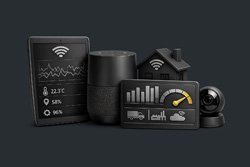
IoT-enabled connected device data to understand customers within the physical and environmental contexts that actively shape their decisions. Technically, it draws on sensor data, location intelligence, and device interaction patterns to build a richer situational picture of audience behaviour. For marketing practitioners, it extends customer market segmentation beyond digital behaviour into the lived, embodied contexts where purchasing decisions are genuinely formed.
5. Ethical Data

Governance frameworks provide the strategic and regulatory foundation upon which all other elements of the toolkit must rest. Technically, this involves consent management, data minimisation principles, transparency protocols, and compliance with evolving regulatory standards. In practice, it ensures that the personalisation made possible by advanced customer market segmentation is experienced by audiences as relevant and respectful rather than intrusive, building the trust that makes long-term audience relationships sustainable.
These five elements are not the exclusive preserve of large organisations with significant technology budgets. They represent a direction of travel that is accessible at varying scales, and every step taken toward operationalising them strengthens the foundation of a more responsive and effective marketing practice. Brand managers and marketers who move beyond understanding these tools intellectually and begin embedding them into their segmentation workflows will find themselves considerably better positioned to meet their audiences where they actually are, in the right moment, with the right message, and with the kind of relevance that builds lasting commercial relationships.
FUTURE-PROOFING CUSTOMER MARKET SEGMENTATION
Build for who they are becoming
There is something genuinely exciting about the strategic moment that marketing finds itself in right now. The conversation about customer market segmentation has matured well beyond questions of tools and taxonomies into something far more interesting: a fundamental rethinking of what it means to truly understand another human being, and to build a brand around that understanding with care, curiosity, and real structural commitment. Future-proofing segmentation is not an exercise in prediction. No framework, however sophisticated, will tell you with precision who your customer will be in five years. What the best systems, capabilities, and cultures can do is something more valuable: they can make an organisation structurally adaptive, genuinely capable of evolving its understanding of its audience in step with the audience itself. That is the strategic posture that separates the brands building lasting relevance from those perpetually catching up.
Building for a customer who does not yet fully exist requires a particular kind of organisational wisdom, one that holds data and humanity in productive balance. Behavioural economics has always understood that the most important signals are not the loudest ones: that what people do is shaped by context, emotion, identity, and aspiration in ways that raw numbers alone will never fully capture. The marketers who will build the most meaningful brand relationships in the years ahead are not necessarily those with access to the largest datasets, but those who have developed the interpretive wisdom to understand what that data is genuinely saying about the human beings generating it. Customer market segmentation at its most powerful is an act of empathy at scale, a structured, disciplined effort to see people clearly and serve them well, and that ambition does not diminish as technology advances; it deepens.
The most encouraging truth about future-proofing customer market segmentation is that the foundation it requires is already within reach for any organisation willing to prioritise it. Adaptive systems can be built incrementally. Data literacy can be cultivated deliberately. Cultures of curiosity, where teams are genuinely motivated to understand their audiences more deeply rather than simply more efficiently, can be nurtured with the right leadership and intent. The brands that will define the next era of marketing are those that approach customer market segmentation not as a technical necessity but as a strategic philosophy, one built on the conviction that understanding people well is always worth the investment, and that the future belongs to those willing to keep learning who their customer is becoming.
Updated: 17 April 2026
