



Modern audiences have modernised needs

Marketers and the Age
of the AI Breakthrough

Responding with greater speed, intelligence and consistency

Emerging technology is reshaping marketing from a discipline built around messages into one designed around intelligent, responsive experiences. Planting marketers firmly in the age of the AI breakthrough. At the centre of this shift is the growing ability to create digital representations of people, products and environments, then connect them to real-time data, adaptive interfaces and physical interaction. This opportunity extends beyond novelty. These technologies can support more useful product demonstrations, inclusive customer journeys, predictive decision-making, immersive retail environments and personalised health or lifestyle services. They also encourage closer collaboration between creative, technology and data teams.

Adaptive, embodied and increasingly personal brand engagement

Table of Contents

THE AI BREAKTHROUGH LANDSCAPE

What customers expect

Audiences increasingly want businesses to understand their needs, personalise interactions and deliver consistent value across physical and digital environments. Because of the AI breakthrough people now know that brands can deliver online experiences, retail spaces, products, services and communications that feel connected rather than separate. For branding professionals, this creates pressure to move beyond broad messaging and static customer journeys. A customer who receives a personalised recommendation online may also expect that relevance to continue in-store, through customer service, or within the product experience itself.

This only becomes a problem when the expectation is viewed as a burden rather than an opportunity. AI breakthroughs give brands the tools to create experiences that are more useful, inclusive and engaging. Intelligent systems can help marketers understand patterns, anticipate customer needs and adapt content or services in real time. Digital twins can support product exploration and customisation. Smart textiles, touch interfaces and brain-computer technologies can open new forms of interaction, including more accessible experiences for people with different physical needs.

The goal is not to introduce technology simply because it is available. The real opportunity is to use AI in ways that remove friction, improve relevance and give customers more control over how they engage. Brands that approach AI with creativity, responsibility and a clear understanding of human behaviour can turn rising expectations into stronger relationships, more memorable experiences and lasting brand value.

THE AI BREAKTHROUGH BROAD CONCERN

A path to practical action

The age of the AI breakthrough presents branding professionals with a complex challenge: how to create intelligent, connected and valuable customer experiences without losing clarity, trust or human relevance. Dissecting this challenge means we can begin building solutions in a structured way, combining creativity, technology and responsible customer understanding.

Brands need accurate, relevant information to understand customer behaviour, preferences and needs. Real-time analysis turns that information into timely insight, allowing businesses to respond as customer circumstances change.Personalisation then converts insight into value. It helps brands tailor content, recommendations and experiences to individuals rather than broad audience groups. Physical interaction expands this relevance beyond screens, connecting AI to retail spaces, products, touch interfaces, wearable technology and other real-world experiences.

Reframing the AI breakthrough from progress in tech to a tool available to every industry ensures that these innovations serve a wider range of people. Inclusive design allows customers with different physical, sensory and cognitive needs to participate meaningfully in brand experiences. Customers also need to understand what information is collected, how it is used and what control they retain. Clear consent and responsible data practices strengthen the relationship between the customer and the brand. System integration connects all the scattered concepts of the AI breakthrough into one cohesive idea. Customer data, marketing platforms, physical environments, service channels and AI tools need to work together to create a consistent experience.

CREATING VALUE FROM THE AI BREAKTHROUGH

Solving the right problems for the right people

or branding professionals, the AI breakthrough is not simply a technology challenge. It is a stakeholder alignment challenge. A valuable solution must balance the expectations of customers, marketers, brand managers, technology teams and business leaders.

Customers want relevance, simplicity and control. They expect personalised experiences that feel useful, but they also want to understand how their data is collected and used. Clear choices, accessible design and secure interactions help build confidence and encourage participation.

Marketers need tools that improve audience understanding, content delivery and campaign responsiveness. Brand managers must ensure that AI-supported experiences remain consistent with the organisation’s identity, values and customer promise. Technology teams require secure systems, reliable data and practical integration across platforms. Business leaders need measurable value, operational efficiency and evidence that investment in AI contributes to sustainable growth.

Brand managers must ensure that AI-supported experiences remain consistent with the organisation’s identity, values and customer promise.

These AI breakthrough priorities shape the definition of a successful solution. It should be relevant enough to meet genuine customer needs, simple enough to use naturally and secure enough to protect sensitive information. It should also be accessible to different audiences, measurable against clear business and marketing objectives, and designed to give customers meaningful control over their participation.

When these needs are considered together, leveraging the age of the AI breakthrough becomes more than an efficiency tool. It becomes a marketing advantage. Brands can deliver more responsive experiences, strengthen trust and make better decisions while maintaining a clear connection between innovation and human value.

THE CONNECTED LAYERS OF THE AI BREAKTHROUGH

Practical value from extra-industry solutions

The strongest AI breakthrough lessons often come from industries that have already solved similar challenges around prediction, responsiveness, accessibility and real-time decision-making. It is not defined by one invention. It is emerging through a connected system of technologies that can observe, interpret, predict and respond to people across physical and digital environments.

Digital twins form the modelling layer. They create virtual representations of products, facilities or customer environments, allowing organisations to test scenarios before applying them in reality. NVIDIA, for example, uses its Omniverse technologies to help industrial teams simulate facilities, identify production challenges and refine operations. For marketers, this AI breakthrough can support virtual showrooms, product customisation and personalised customer journeys.

Artificial neurons provide the intelligence behind prediction. Intel’s Loihi neuromorphic processors use brain-inspired, event-driven computing to recognise patterns and adapt efficiently. Applied to marketing, this capability could improve demand forecasting, recommendations and real-time customer responses.

Smart textiles extend this intelligence into everyday objects. Hexoskin garments embed sensors that continuously monitor cardiac, respiratory and activity data. This demonstrates how fashion, healthcare and fitness brands can create services that respond to the wearer rather than simply presenting a static product.

Touch and haptic interfaces provide the sensory layer. Zytronic is leading the way in the age of the AI breakthrough with projected capacitive technologies show how durable interactive surfaces can support kiosks, displays and self-service experiences. When paired with tactile feedback, these interfaces make digital interactions feel more intuitive and immersive.

Connected health systems bring multiple data sources together. Q Bio combines imaging, biomarkers, genetics, wearable data and physician review into a longitudinal health record, illustrating how personalisation can develop through a more complete understanding of the individual.

Brain-computer interfaces complete the system by expanding accessibility and responsive control. EPFL has demonstrated machine-learning systems that translate brain signals into robotic commands, with the goal of helping people with tetraplegia perform everyday activities more independently.

Together, these AI breakthroughs offer brands a pathway from observation to prediction, and from prediction to meaningful interaction. Their marketing value lies in creating experiences that are personal, immersive, inclusive and responsive to genuine human needs.

UNDERSTANDING THE AI BREAKTHROUGH SIGNALS

Using tech to navigate marketing

The opportunity is to translate these lessons from the broader AI breakthrough landscape into an actionable framework that brands can use to create campaigns that are more timely, interactive and useful. This gives teams a shared way to evaluate opportunities, prioritise investments and connect innovation to measurable customer value.

1. Notice the Data

AI Breakthrough Signals 1 Notice the Data

Before marketers can personalise anything, they need a clear, holistic picture of their audience. This step encourages brands to build a “customer digital twin”, drawing together data points such as preferences, behaviours, and purchase history into one evolving profile, much as Q Bio does with individual health data. This taps into the behavioural economics principle of relevance and choice architecture, ensuring that whatever is offered next feels tailored rather than generic. Audit existing customer data sources and consolidate them into a single, continuously updated profile that can inform every subsequent campaign decision.

2. Experiment
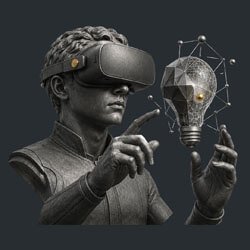
AI Breakthrough Signals 2Rather than committing budget to untested ideas, marketers can simulate campaigns, product launches, or customer journeys in a virtual environment first. This lowers the emotional and financial stakes of trying something new, addressing the natural loss aversion that makes brands hesitant to innovate. Use virtual prototyping or simulation tools to test campaign concepts and gather early feedback before full-scale launch.

3. Unlock the Senses

AI Breakthrough Signals 3 Unlock the SensesMultisensory experiences create stronger emotional memories than visual or text-based messaging alone. This step encourages marketers to consider tactile and interactive elements, such as touchscreens, haptic feedback, or interactive installations, to deepen engagement. This connects to the behavioural principle that sensory involvement increases perceived value and recall. Identify one touchpoint, whether in retail, events, or digital signage, where an interactive or tactile element could replace a passive one.

4. Reward Loyalty

AI Breakthrough Signals 4 Reward LoyaltyWearable technology offers a natural platform for gamification and ongoing engagement, encouraging repeat interaction through small, satisfying rewards. This draws on the behavioural economics principle of variable reward and reciprocity, where consumers feel more loyal to brands that recognise and reward their engagement. Explore partnerships or pilot programmes involving wearable or smart textile elements that reward customer actions, such as loyalty points for physical activity or brand interaction.

5. Anticipate Tomorrow

AI Breakthrough Signals 5 Anticipate TomorrowPredictive analytics allows marketers to move from reactive to proactive strategy, anticipating shifts in demand, sentiment, or pricing opportunities. This step highlights the value of pattern recognition and forecasting, while also drawing on the behavioural principle of anchoring, where early, well-timed offers shape customer expectations and decisions. Introduce or expand predictive analytics tools to forecast trends and automate repetitive tasks, freeing the team to focus on strategy and creativity.

6. Lead With Empathy

AI Breakthrough Signals 6 Lead With EmpathyTechnology should ultimately serve people, not the other way around. This final step reminds marketers that authenticity and inclusivity build trust more effectively than novelty alone. Sharing genuine stories, prioritising accessibility, and respecting data privacy all reinforce the behavioural principle that trust is the foundation of long-term loyalty. Build at least one campaign element around a genuine customer story or an accessibility-focused feature, ensuring transparency in how any data is collected and used.

Together, these six steps form a practical, sequential pathway, allowing marketers to move from understanding the data, through experimentation and sensory engagement, to prediction and, ultimately, authentic connection. In the Age of the AI Breakthrough, success will come from applying technology with purpose, structure and a clear understanding of human behaviour.

AI BREAKTHROUGH RESHAPING BRANDING

New ways to understand, engage and create value

The framework becomes most useful when it is applied as a connected system rather than a checklist. Real world campaigns show how data, experimentation, sensory interaction, prediction, loyalty and empathy can work together to create practical marketing value.

Spotify Wrapped transforms each listener’s activity into a personalised annual story featuring favourite artists, songs, genres and listening behaviours. It effectively creates a simplified customer digital twin from each user’s listening history, using relevance and choice architecture to give every user a story that feels personal, while the design naturally encourages sharing. Wrapped also acts as a variable reward. Customers know that the experience will arrive annually, but they do not know what their results will reveal. That anticipation encourages continued participation and turns ordinary platform use into a recognised personal achievement. This approach has strengthened Wrapped into a global cultural event. Spotify reported that its 2023 campaign engaged a record 227 million monthly active users. Spotify made customer data feel entertaining, emotionally relevant and socially valuable. The brand did not simply explain what users had done. It helped them express who they were.

Cadbury and Ogilvy used machine learning, geolocation and dynamic creative technology to produce personalised advertisements in which actor Shah Rukh Khan promoted nearby small businesses. Location and local business data determined which shop appeared in each advertisement. Machine learning recreated the actor’s face and voice, allowing the team to generate thousands of localised creative variations at a scale that conventional production could not easily achieve. Ads were then delivered according to the viewer’s location. The campaign’s emotional strength came from its purpose. Cadbury used the reach and resources of a national brand to give local retailers access to a famous ambassador during a challenging commercial period.

Ogilvy reported that the initiative supported more than 200,000 stores across India, and the campaign received the Creative Effectiveness Grand Prix at Cannes Lions. The technology served a clear human idea. Personalisation made the advertising locally relevant, while empathy made the campaign meaningful and aligned it with Cadbury’s positioning around generosity.

L’Oréal has connected AI-supported media targeting with tools such as SkinGenius and virtual product try-on. SkinGenius analyses a customer’s skin and recommends suitable routines and products. Virtual try-on technology allows customers to preview cosmetics using live video or uploaded photographs. Together, these tools reduce uncertainty and allow customers to explore options before purchasing. In a Nordic multi-brand campaign, L’Oréal used Google’s AI tools and creator content to direct more qualified customers towards SkinGenius. The campaign achieved a click-through rate 3.6 times higher than relevant benchmarks, a cost per click 7.5 times lower, and a 50 per cent year-on-year increase in tool completion in Sweden. L’Oréal connected media, data and product experience across the customer journey. AI did not merely improve targeting. It helped customers make more confident and informed choices.

Across all three campaigns, success came from turning technology into customer value. Spotify offered recognition, Cadbury created local opportunity, and L’Oréal reduced purchasing uncertainty. The AI Breakthrough Framework works because it encourages marketers to begin with genuine audience needs, select technology with purpose and create experiences that reward participation rather than simply attracting attention.

Branding professionals now operate in a landscape where customers expect relevant, personalised and connected experiences across physical and digital environments. Meeting this expectation requires more than adopting isolated technologies. It requires an integrated approach that connects the AI breakthrough’s powering data, creativity, behavioural insight and responsible innovation.

Interactive technologies such as smart textiles, touch interfaces, digital twins and connected systems are AI breakthroughs that can transform passive communication into immersive participation. These experiences become more valuable when they are supported by thoughtful personalisation, accessible design and meaningful rewards that encourage continued engagement.

Success ultimately depends on trust. Customers need transparency, security and control over how their information is used. When marketers combine experimentation, data-driven insight and empathy within a connected framework, emerging technology driving the AI breakthrough becomes more than a novelty. It becomes a practical tool for creating stronger relationships, informed choices and measurable brand value.

Published: 14 August 2026

Nucleus Vision Digital and Design Legends
A full-service Marketing and Design Agency
hero@nucleusv.com
www.nucleusvision.digital

whatsapp-icon