

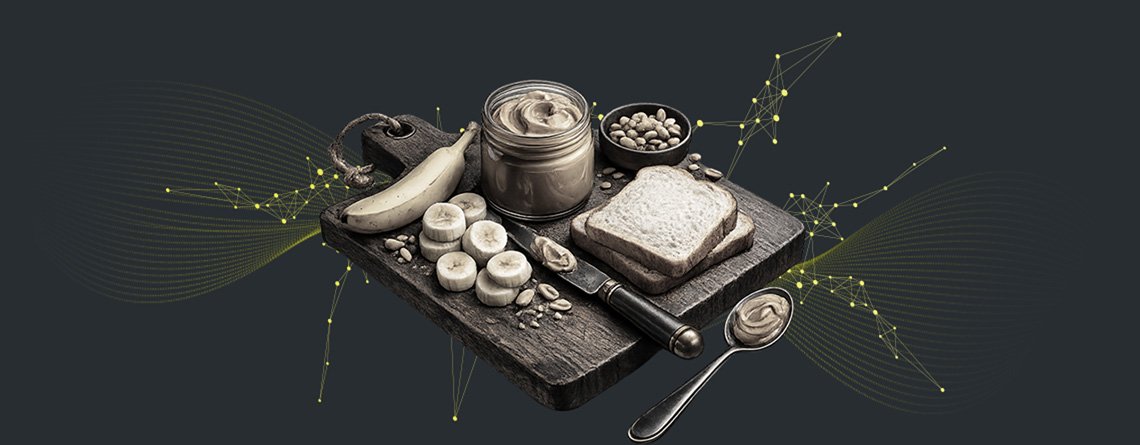

Improve Customer Engagement with Brand Collabs Web Banner

Responding to the relationship shift between brands and humans

Improve Customer Engagement
with Brand Collabs

Transform collaboration from a marketing event into a cultural contribution

Cultural impact is almost never what brands plan for, but what started as tactics to improve customer engagement, grew into the partnerships that introduced a combination of ideas, aesthetics, or values that did not exist together before. These partnerships then transform into the fundamental codes useful to how people express themselves. The partnerships that endure in cultural memory gave people a new language, introducing a reference point, a shorthand, an image they keep returning to. Beyond that, great partnerships make audiences feel validated, as though their taste has been confirmed by two brands they respect choosing each other.

Toward creative ambition and shared purpose

Table of Contents

WHAT DRIVES US TO IMPROVE CUSTOMER ENGAGEMENT

A crisis of meaning

We are living through a profound erosion of trust, not just in advertising, but in institutions, media, and the signals we use to make sense of the world around us. In an effort to improve customer engagement brand leaders and marketing professionals are in search of a framework that serves the bottom line, while still respecting the humanity of all stakeholders.

Audiences today are not simply distracted. They are exhausted. Decades of being spoken at rather than spoken with has produced a generation of consumers who have developed sophisticated filters against anything that feels manufactured, opportunistic, or hollow. When everything competes for attention, and when that attention is met with messages that feel predictable or insincere, people disengage and disconnect entirely.

This creates a difficult paradox for brand leaders. The louder the marketplace becomes, the more brands feel pressure to shout louder still, which accelerates the very fatigue they are trying to overcome. Meanwhile, audiences are quietly seeking something far more valuable than novelty: they are seeking confirmation that their choices, values, and identities are coherent and worthwhile. They want to feel that they discovered something rather than being sold something, and that the brands they engage with have genuinely earned their place in that story. The result is an audience that is simultaneously overstimulated and underloved. They are sceptical of motives, uncertain of their own judgement in a world of infinite options, and conditioned to expect that whatever captures their attention today will be forgotten by the week after next.

For marketing professionals committed to authentic engagement leveraged to improve customer engagement, this is the real challenge. It is not about finding a better tactic or a more creative campaign. It is about rebuilding the conditions in which genuine connection between brands, collaborators, and audiences becomes possible again. Every tactical decision we make either contributes to that restoration or deepens the problem.

FAILING TO IMPROVE CUSTOMER ENGAGEMENT

Barriers that deserve attention

When a brand earnestly commits to implementing tactics that improve customer engagement challenges will reveal themselves. When brand collaborations follow familiar patterns, audiences develop a kind of perceptual immunity, tuning out before the message even lands, which naturally pushes brands towards louder and more frequent one-directional broadcasting in an attempt to compensate for diminishing returns. Yet this broadcasting reflex deepens the very problem it is trying to solve, because audiences operating in a low-trust media environment become increasingly sceptical of any brand communication that feels pushed rather than discovered, and that scepticism sharpens considerably when the communication in question is a brand partnership that appears motivated by mutual exposure rather than genuine shared purpose.

At this point, audiences do not simply disengage from the collaboration itself; they experience a subtler but more damaging effect, a quiet uncertainty about whether their own instincts and loyalties are well-placed, which triggers the human need for identity confirmation and draws them towards voices and communities that make them feel validated rather than marketed to. And even in those rarer moments when a collaboration successfully breaks through these layers of fatigue, scepticism, and uncertainty, attention decay ensures that without a sustained cultural presence beyond the launch moment, the connection dissolves almost as quickly as it formed, leaving no lasting impression on behaviour or loyalty.

Left unexamined, the challenges compound one another and erode all tactics employed to improve customer engagement. Predictable collaborations reinforce scepticism. Scepticism accelerates disengagement. Disengagement rewards louder, more interruptive broadcasting, which erodes trust further still. Recognising this cycle is the first step towards breaking it. These concerns map directly onto how human beings process information, form identities, allocate attention, and decide what to trust. When brands ignore these cognitive and emotional realities, they are not simply missing a creative opportunity. They are actively working against the way their audiences are wired to engage with the world.

There is also a broader commercial case. Brands that invest in understanding these challenges are far better positioned to build the kind of long-term loyalty that sustains growth, because they are solving for meaning rather than just metrics. Audiences who feel genuinely seen, validated, and surprised in the right ways become advocates. Those who feel processed become indifferent.

These challenges matter because our audiences are people first and consumers second. They deserve communications that respect their intelligence, honour their time, and contribute something worthwhile to their experience of culture.

PATHWAYS TO IMPROVE CUSTOMER ENGAGEMENT

Authentic collaboration as a solution

When brand collaborations are built on genuine creative alignment rather than commercial convenience, they have a remarkable capacity to address the challenges raised, and the benefits ripple meaningfully across the entire ecosystem. 

Authenticity dissolves predictability. Brand collaborations can improve customer engagement by introducing combinations that feel genuinely surprising yet coherent, giving audiences a reason to pay attention that no media budget alone could manufacture. This shifts the dynamic away from broadcasting and towards cultural participation, where consumers share because the collaboration reflects something true about their own identity and values, providing the confirmation they are quietly seeking and replacing scepticism with a sense of co-ownership.

This signals to our audiences, the end consumer, that the brands involved understand and respect their audience's intelligence, and values.

For marketers, this represents a fundamental shift in how success is measured. Rather than optimising for reach and frequency, the focus moves towards depth of engagement and longevity of cultural relevance, addressing attention decay by building narratives that continue to reward audiences well beyond the launch moment. These collaborations generate content and products that audiences actively seek out and advocate for, reducing dependence on paid amplification and creating organic distribution pathways that are far more trusted and efficient than traditional channels.

This signals to our audiences, the end consumer, that the brands involved understand and respect their audience’s intelligence, and values. And our efforts to improve customer engagement are always underpinned by the desire for meaningful cultural experiences rather than transactional interruptions. This builds the kind of long-term loyalty that transcends individual campaigns. Across the entire ecosystem, the shared gain is trust, and trust, once established through consistent authenticity, becomes a compounding asset. It reduces friction at every stage of the customer journey, aligns commercial incentives with genuine human value, and creates the conditions in which all stakeholders can thrive together rather than competing for diminishing attention.

IMPROVE CUSTOMER ENGAGEMENT WITH BRAND COLLABORATIONS

The pursuit of cultural resonance

Well-designed collaborations leveraged to improve customer engagement speak directly to the cognitive and emotional realities of how people form identities, allocate trust, and decide what is worthy of their attention and advocacy. This means that brands investing in this area are investing in a deeper understanding of the human beings they serve. There is also a compelling commercial dimension, because the loyalty, advocacy, and cultural relevance that authentic collaboration generates are compounding assets that strengthen every other aspect of a brand’s performance over time, from customer acquisition to retention to pricing power. When brand leaders and marketing professionals deploy these five tactics in concert, they form a coherent and self-reinforcing strategy for building the kind of cultural relevance that authentic customer engagement genuinely requires.

1. Creative Tension

Improve Customer Engagement 1 - Creative Tension

Memorable collaborations introduce a combination that didn’t exist before. That means resisting the instinct to partner with whoever is most similar or most safe. The tension between two distinct worlds, like streetwear and fine dining, luxury and utility, or high art and mass culture is the source of the friction that makes people stop and look. Aim for the “inevitable in hindsight” test. Before launch, ask honestly: does this combination feel surprising but, once you see it, completely logical? That sweet spot we are aiming for is “unexpected yet coherent.” This immediately signals to audiences that something worthy of their attention is taking place. Something that did not exist before and could only have emerged from a place of genuine creative ambition rather than commercial calculation.

2. Discovery Architecture

Improve Customer Engagement 2 - Discovery ArchitectureLet the audience be the distributors, not just the recipients. Campaigns built for media spend treat audiences as endpoints. Campaigns built for cultural longevity treat audiences as participants. That means creating something with enough texture, symbolism, and openness that people can remix, reference, and build on it. Give them a visual language, a phrase, or an image rich enough to be quoted. Design for “discovery” rather than “announcement”. Make people feel like they found something. This is a distribution and seeding strategy that leans into limited drops, word-of-mouth rollouts, and community-first reveals rather than mass advertising launches. Scarcity and selectivity create the feeling of being in on something.

3. Taste Validation

Improve Customer Engagement 3 - Taste ValidationShow your audience that they were right all along. Validate existing taste, don’t just introduce new taste. One of the most underused tools here is the affirmation loop. Invest in making the collaboration feel inevitable, which signals to a specific audience that their sensibility was right all along. Brands should ask: whose taste does this confirm? If the answer is “everyone,” the collaboration is probably too broad to land deeply with anyone. Amplify the emotional reward for those already connected to either brand, affirming that their loyalty and instincts were well-placed and that they were part of something culturally significant before it reached the mainstream, deepening their sense of identity and ownership within the collaboration’s story.

4. Shared Stakes

Improve Customer Engagement 4 - Shared StakesBeyond a cameo, prove both brands have skin in the game. Stand for something jointly, not adjacently. The partnerships that last are the ones that are genuinely willing to stand for something together. That means both brands have to be willing to let the collaboration change how they’re perceived and to take a shared position, aesthetic stance, or cultural bet. If one partner is just lending their logo, the audience can feel it. Commit to demonstrating through creative risk, resource investment, and aligned values that this partnership is a sincere expression of mutual belief rather than a transactional arrangement, which in turn neutralises scepticism and invites deeper trust from even the most discerning audience members.

5. Life Beyond Launch

Improve Customer Engagement 5 - Life Beyond LaunchBuild a cultural movement, not a calendar moment. Rather than attaching a collaboration to a broad seasonal event, brands should identify a more specific cultural conversation already in motion. Be it a subculture, a taste shift, an emerging aesthetic, find something to connect to, and contribute to it. Ensure that this carefully constructed momentum does not evaporate after a single announcement, instead extending the collaboration into an evolving cultural moment that continues to reward engagement, generate conversation, and deepen loyalty long after the calendar has moved on, transforming a tactical partnership into a lasting contribution to the culture that surrounds and sustains both brands.

The throughline across all of these is trust: trust that the audience is perceptive enough to appreciate the combination, and enough conviction to let them carry it forward rather than over-explaining it. Earnestly pursuing better methods to improve customer engagement through this collaboration framework is an expression of professional integrity, a recognition that the brands with the greatest opportunity to shape culture carry a genuine responsibility to do so thoughtfully, generously, and with the long-term wellbeing of their audiences and communities firmly at the centre of every decision they make.

STRATEGIES TO IMPROVE CUSTOMER ENGAGEMENT

Brand collaboration as a path to authentic engagement

Brand collaboration is truly one of the strongest strategic responses to the crisis of meaning in modern marketing that leads to a lack of methods and tactics to improve customer engagement. A coherent framework for addressing the challenges, when deployed with genuine creative ambition and shared purpose, can transform collaboration from a marketing event into a cultural contribution, one that earns attention, builds trust, rewards loyalty, and sustains engagement well beyond the launch moment.

The collaboration between Liquid Death and Van Leeuwen Ice Cream demonstrates how two brands with distinct but complementary identities can create outsized marketing impact by leaning into their differences. Faced with the challenge of launching an unconventional product the campaign balanced Liquid Death’s edgy, heavy-metal aesthetic with Van Leeuwen’s premium artisanal image through bold visuals, influencer-driven social media content, a limited-edition launch designed to trigger FOMO, and experiential pop-up events. The result was viral engagement, rapid sell-outs, and heightened brand awareness for both parties. The key takeaway for marketers is that boldness, authenticity, and a willingness to subvert consumer expectations, while staying grounded in genuine brand identity, can transform an unlikely partnership into a powerful cultural moment.

In 2023 Heinz and Absolut Vodka showed how brands can turn a social media moment into a tangible, commercially successful product. Inspired by the viral resurgence of pasta alla vodka, popularised by Gigi Hadid’s Instagram post, the two brands combined their respective strengths to launch a limited-edition Tomato Vodka Pasta Sauce in the UK. The campaign used a branded hashtag, selective retail availability to create exclusivity, dual-brand storytelling, and press coverage to generate widespread buzz and strong social engagement. The broader lesson for marketers is that regularly reading the cultural and social landscape allows brands to create campaigns that feel timely and relevant, and when paired with authentic brand narratives, these moments can build lasting trust and resonance that outlives the trend that sparked them.

The Arsenal x Adidas partnership demonstrates how sports merchandising can transcend its traditional purpose and become a vehicle for culture, identity, and social impact. Relaunched in 2019, the collaboration moved beyond standard kit marketing by treating each campaign as a fashion editorial, featuring players alongside local creatives and musicians, and grounding designs in the cultural identity of the club’s fanbase. Standout moments included a pre-match collection inspired by Jamaican culture and the “No More Red” anti-knife crime campaign, which used an all-white kit as a bold social statement and earned over 1.5 million social engagements. The results were commercially significant too, with the 2022/23 home shirt becoming the fastest-selling in club history. For marketers, the campaign illustrates that when authenticity, visual storytelling, and shared values are placed at the centre of a campaign, a product can become a cultural symbol that resonates far beyond its original audience.

Audiences today are exhausted by predictable partnerships, distrustful of one-directional advertising, and sceptical of transactional motives. Commercially, authentic collaboration generates compounding assets in the form of loyalty, advocacy, and cultural relevance that strengthen long-term brand performance. Strategically, it aligns marketing decisions with the behavioural and emotional realities of how human beings actually process trust, identity, and meaning. And professionally, it reflects a commitment to treating audiences as people first and consumers second, which is both the right thing to do and the most effective long-term approach available.

Ultimately, the brands that success in implementing methods that truly improve customer engagement are those that understand collaboration not as a shortcut to reach, but as a genuine investment in the kind of authentic, participatory, and enduring relationships that modern audiences are actively searching for.

Published: 31 July 2026

Nucleus Vision Digital and Design Legends
A full-service Marketing and Design Agency
hero@nucleusv.com
www.nucleusvision.digital

whatsapp-icon